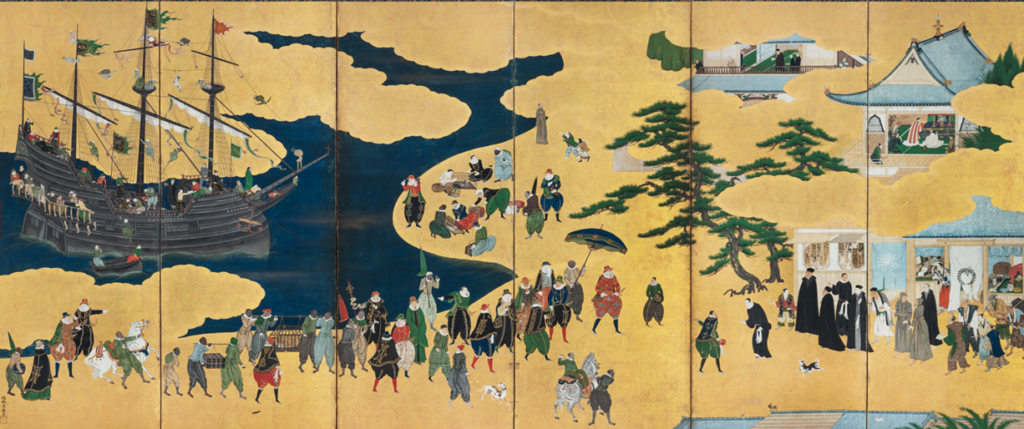
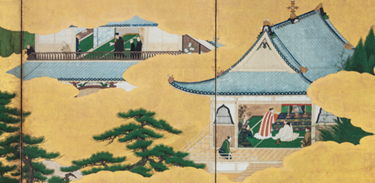
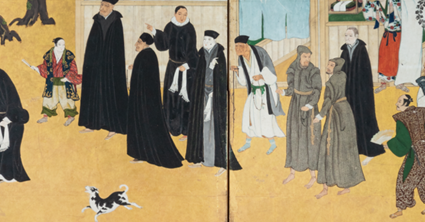
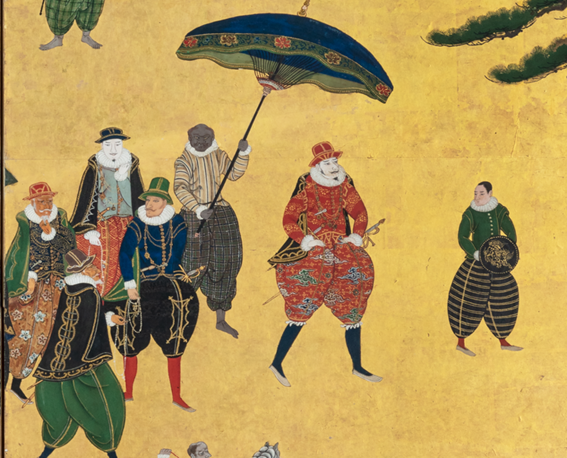
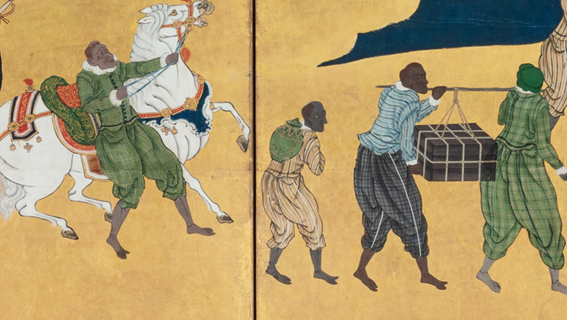
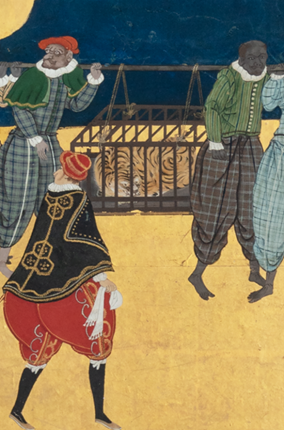
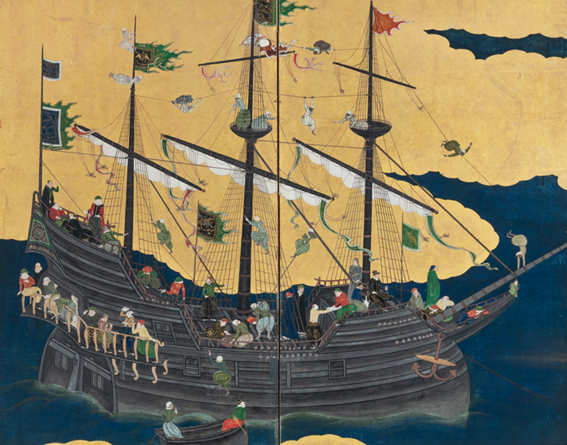
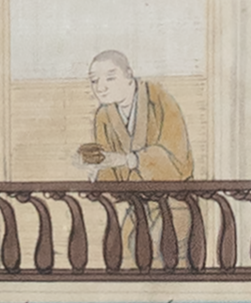
The Namban Byōbu (南蛮屏風) reflects Japanese fascination with Europeans during the Namban period (c. 1543–1639).
The screen was produced during the height of the Namban Trade Period (南蛮貿易時代),
when Portuguese merchants and Jesuit missionaries regularly travelled between
Macau, Goa, Malacca, Nagasaki, and other ports in East Asia. Unlike many later
Namban screens that became increasingly decorative, Naizen's work appears to be
based on direct observation of Portuguese visitors and Christian communities in
Japan. It combines commercial, religious, and social themes into a single
visual narrative.